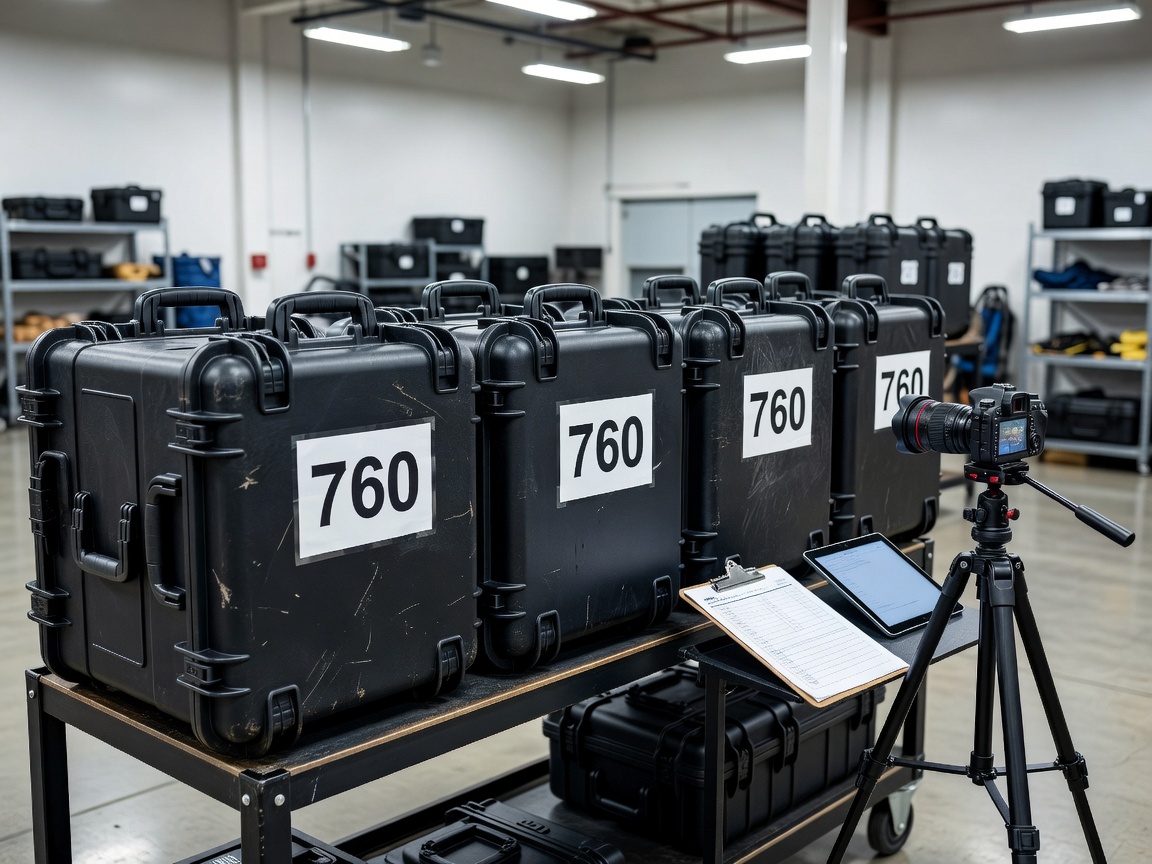
Keep the lease record complete
Store the agreement reference, equipment identifiers, quantities, location, responsible contact, review date and relevant correspondence in one controlled record. The record should show what was received and where it is now.
Identify and inspect
Match labels and serial information where applicable. Compare the inventory with the physical equipment. Record condition consistently, including visible wear, missing components, cleaning status and any reported fault. Follow the agreement and manufacturer guidance rather than assuming a contractual standard.
Prepare the return
Start before the end date. Confirm what must be collected, where it will be staged, who coordinates access and whether packaging or accessories are present. Clean equipment according to suitable instructions. Separate items by identifier and keep a simple packing or collection list.
Coordinate collection
Confirm the planned collection window through the relevant channel. Record the date, handover contact, quantities and any exceptions. Do not rely on memory or informal messages for a high-value or operationally important inventory.
Review renewal options
Return preparation should run alongside the renewal decision. Ask whether the club still needs the category, whether the current specification fits, and whether condition or use has changed. A return record can support a clear renew, replace or discontinue decision.
Record retention
Retain records according to the club’s policy and applicable legal or contractual requirements. Keep condition evidence, collection confirmation and final inventory status together. Limit access to people who need the information for operations, finance, procurement or governance.
Advantages and limitations
Good records reduce confusion, duplicated requests and avoidable end-of-term work. They do not replace the agreement, professional inspection or legal advice. Any disputed condition or obligation should be handled through the appropriate contractual process.
What to know
Return management starts when equipment arrives. Identification, storage and condition records make the final review more controlled.
Short checklist
□ Match physical assets to records.
□ Log condition and missing components.
□ Confirm cleaning and packaging needs.
□ Coordinate collection and handover.
□ Archive the final decision and evidence.