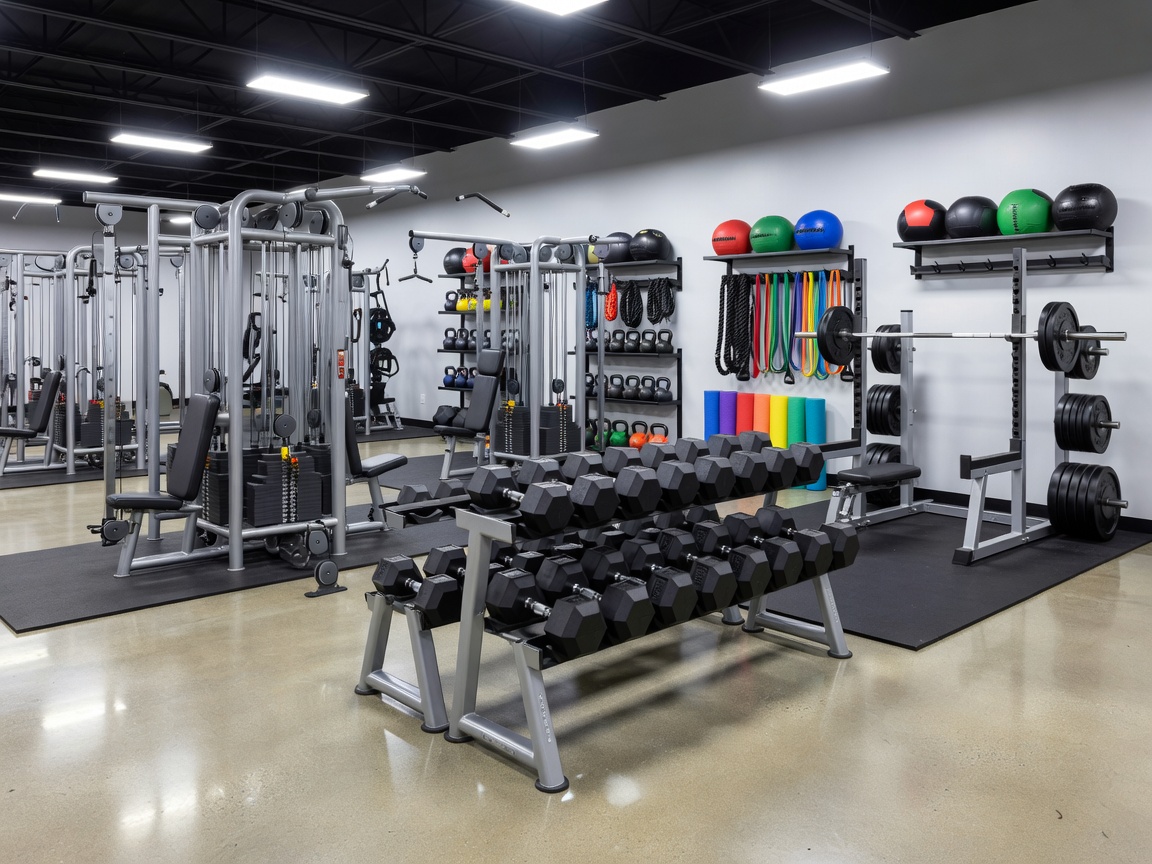
Start with the training environment
Map the floor before selecting equipment. Identify strength and conditioning stations, practice areas, club fitness rooms, rehabilitation spaces and mobile equipment. Note which items are fixed, which move between teams and which need controlled access.
Potential categories include racks, benches, free weights, resistance systems, timing accessories, mats, hurdles and storage units. The correct specification depends on use, available space, supervision and manufacturer guidance.
Seasonal demand changes
A club may need different equipment emphasis during pre-season, competition periods and development blocks. A shared asset may work when teams train at different times, but not when schedules overlap. Record the timetable, expected users and movement route before assuming one inventory can serve every group.
Allocation between teams
Assign equipment to a team, facility or training zone. Use simple identifiers and a responsible person for each area. Allocation does not need to prevent sharing; it needs to make movement and condition visible.
Maintenance and condition
Record inspection requirements, cleaning routines, wear points and reporting routes. Equipment that is repeatedly moved may require a different control method from equipment that remains in a dedicated room. Follow the manufacturer’s instructions and local safety procedures.
Advantages and limitations
Leasing can create a useful review point when training needs are changing. It can also support a planned mix of fixed and mobile equipment. The limitation is administrative: records, return preparation and condition checks must be maintained. Leasing does not remove the need for safe selection or competent supervision.
Replacement planning
Use condition, use frequency, repair history and training relevance. Do not apply one fixed interval to all equipment. A heavily used item may need attention before a lightly used item of the same age. Review category guidance and manufacturer information where available.
What to know
The best training equipment plan is specific to the floor, timetable and users. A clear allocation record reduces unnecessary movement and helps the club identify what should be renewed, repaired or returned.
Short checklist
□ Map every training zone.
□ Record shared users and timetable conflicts.
□ Assign storage and responsible contacts.
□ Schedule condition and cleaning checks.
□ Review equipment before the next training period.